
Georgia DNR cleared camping gear from Little Tybee in early November and plans to give campers until Dec. 15, 2026, to remove wooden decks at Long Island. If the structures remain, the agency says it will remove them.
DNR first inspected the campsite area in October, when wildlife biologists Fletcher Smith and Tim Keyes found gear left over the summer. It included tarps, tents, a propane oven, stove top and grill, heavy-duty water coolers, plastic chairs and a table, bedside commode chairs, and a makeshift septic system built around an underground plastic barrel. Smith said the site was less extensive than what DNR encountered in 2023, but still was not allowed.
The agency initially expected to hire Zulu Marine Services to remove the equipment. A company staffer had accompanied the October inspection to help estimate the work’s cost. In early November, Smith and Keyes returned with three boats and nine DNR personnel. Some equipment, including the stove, had already been removed; the crew cleared the rest in one tide cycle. Sharpley joined the workers as a volunteer.
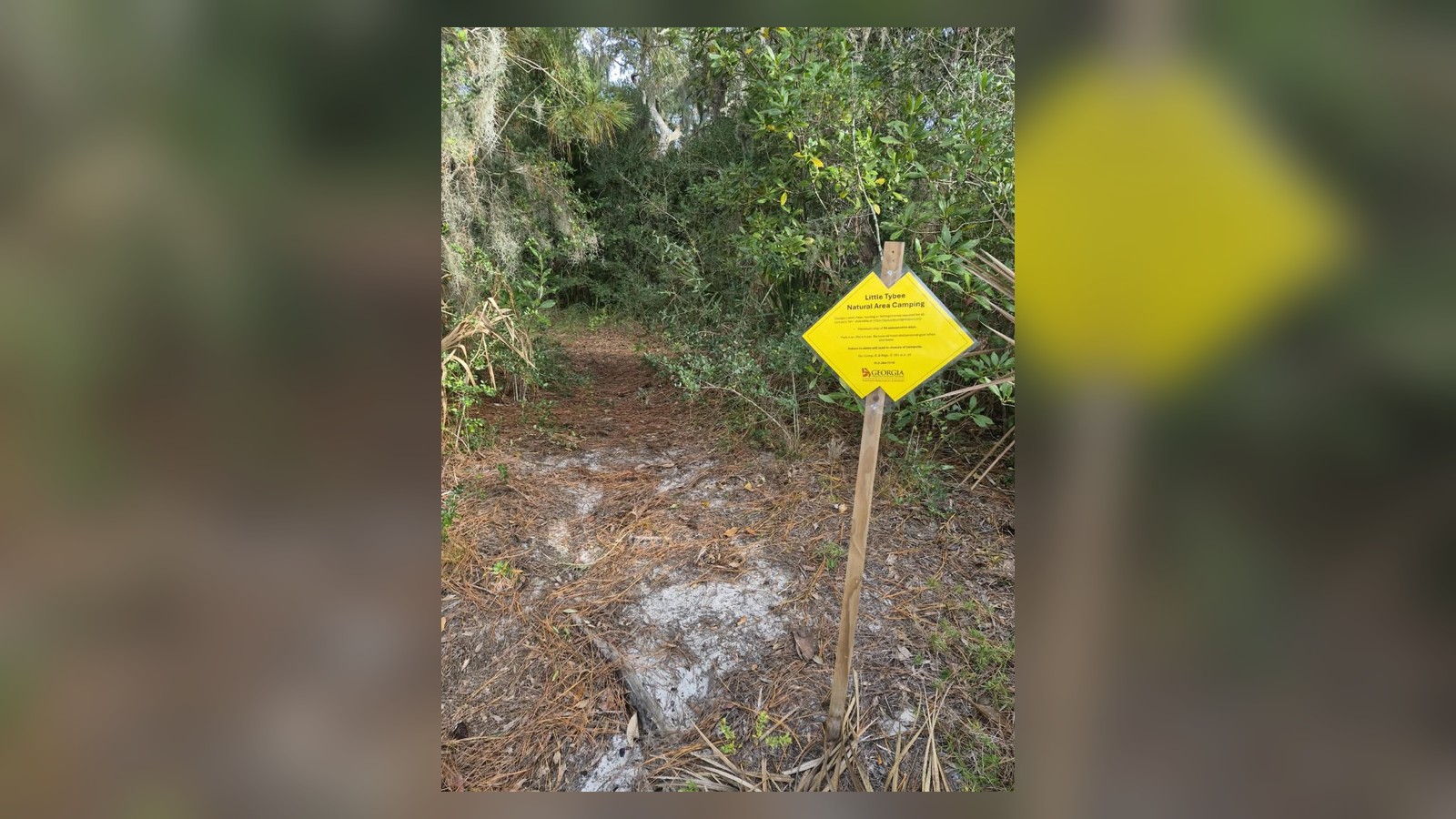
DNR has posted camping rules for people expected to visit the island, including over Thanksgiving. Campers age 16 and older need a Georgia Lands Pass, hunting license or fishing license; Georgia Lands Passes are available through Go Outdoors Georgia. Stays are limited to 14 consecutive days, and campers must pack out their trash and personal gear. The signs state that failure to follow the rules will lead to campsite closure. They cite Georgia Comp. R. & Regs. R. 391-4-2-.61 and list 912-264-7218.
DNR law-enforcement officers were expected to visit over Thanksgiving weekend to explain the rules. Keyes described the agency’s approach as a shift from not enforcing restrictions on long-term, permanent structures to applying standard camping rules for Wilderness Management Areas. He said the first law-enforcement cycle would focus on education; enforcement would follow if people continued to ignore officers after being spoken to.
At Long Island, where a handful of wooden decks have been built in recent years, DNR planned to put up bright yellow notices on its next trip. The notices would give campers until Dec. 15, 2026, to remove the structures or have DNR remove them. The available information does not confirm that the signs have been posted. Keyes said campers who take down the decks themselves would save DNR time and labor.
The October visit began as a reconnaissance trip to inspect semi-permanent camping structures that had returned after DNR cleared the area three years earlier. At the landing, Smith and Keyes found a small motorboat carrying string trimmers, a rake, shovel and ax. Keyes called DNR law enforcement for backup, but Chatham County-based officers were checking shrimp boats and were unavailable.
The biologists then approached two men in their 60s who were using string trimmers to clear vegetation. One was Bill Sharpley, who had been told in 2023 that Little Tybee is a natural heritage preserve. Sharpley said he knew about the structures and had cleared some vegetation so young children could move around the campsite more easily. “We didn’t think cutting the grass would be an issue,” Sharpley said. The other man identified himself only as Bobby.
Smith saw freshly cut high-marsh plants, including seaside goldenrod. He said the plants would have provided food for overwintering monarchs and that high-marsh vegetation offers roosting and nesting areas for birds such as seaside sparrows. Cutting vegetation anywhere on a natural heritage preserve is prohibited, and removing salt-marsh vegetation with power tools along the coast requires a permit.
Keyes told Sharpley the island is protected property. He said DNR might eventually establish campsites where some work could be permitted, but that was not the situation during the inspection. A Chatham County Police Department spokeswoman confirmed Sharpley remains a lieutenant in the department’s Marine Patrol.
DNR found a larger set of wooden shelters and camping supplies in 2023, including stoves, toilets, showers and tents. Sharpley, then a Marine Patrol officer, argued in emails with DNR and The Nature Conservancy that structures should remain, citing what he described as a 40-year camping tradition. The items included a makeshift kitchen and rope bridge. State officials declined his request to leave some structures and spent more than $35,000 removing structures and trash.
Jason Lee, The Nature Conservancy’s deputy executive director in Georgia and a former DNR official who held Keyes’ position, accused campers of littering, clearing ancient live oaks and setting a poor example for children by violating state law. Keyes compared unauthorized mowing to cutting vegetation in Forsyth Park and said public access must remain within its boundaries.
Patrolling the area presents logistical challenges. DNR boats have difficulty navigating the small creeks leading to Little Tybee’s campsites, which are scattered among marshes, hammocks, islands and sandbars. Lee said the area probably contains more than 100 islands, and that tides and terrain can make some locations reachable only at high tide, leaving a short window for inspections.
The Nature Conservancy has historically checked the area visually from the beach each year and works with DNR, whose wildlife-survey flights can spot campsites. Satellite images can also reveal campsites. The organization has not used drones on Little Tybee but is interested in the possibility; Lee said cost is a factor, though the group uses drones elsewhere.
The state’s Little Tybee and Cabbage Islands Natural Area covers 7,700 acres beside Tybee Island and carries a Heritage Preserve designation. Little Tybee can be reached only by boat; its landscape includes secluded beaches, forested upland and salt marsh. After Kerr McGee abandoned plans to mine phosphate there, it gave the land to The Nature Conservancy, which sold it to Georgia in 1991 for $1.5 million and retained a permanent easement.
With the campsite work completed, Smith and Keyes can return to other duties, including tracking rufa red knots. The threatened shorebirds feed along the Georgia coast each spring before migrating to the Arctic. The two biologists co-authored a 2023 study on the importance of the Southeastern coast to the birds.

Yolonda Harris
News Now Georgia

