
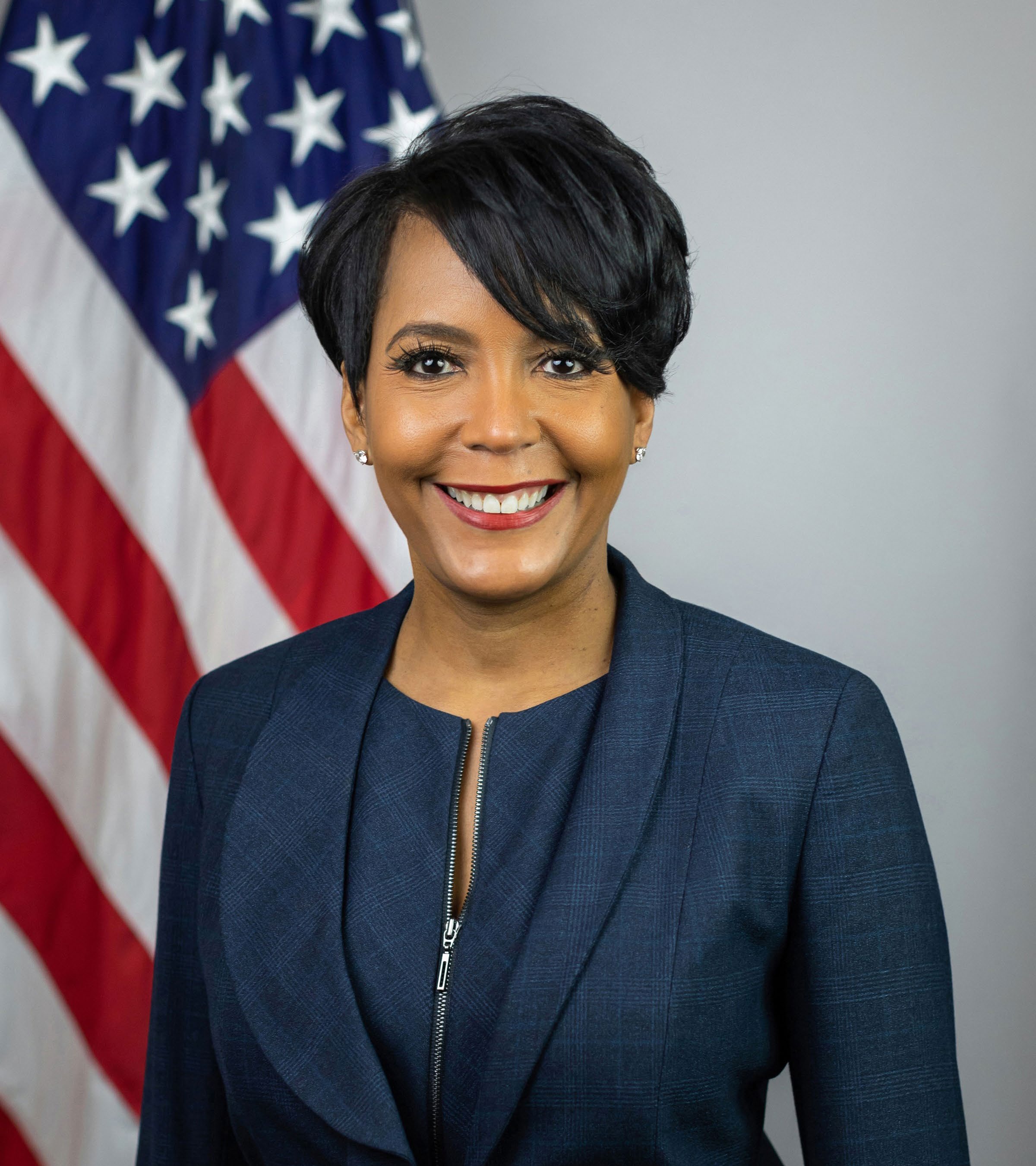
Georgia elected Keisha Lance Bottoms as the nation’s first Black woman governor, and African American women won six other statewide offices. Researchers David Campbell and Christina Wolbrecht of the University of Notre Dame say seeing leaders who resemble them can encourage young people to engage in politics.
The six other statewide offices are secretary of state, attorney general, state school superintendent, agriculture commissioner, insurance commissioner and labor commissioner. Campbell and Wolbrecht also describe a Black woman as the likely next speaker of the Georgia House, but do not report a final selection or say she has taken office.
The authors recount post-midterm coverage that showed mostly white men giving way to Black women leaders. They also relate reporter Candace McEwen’s account of her 9-year-old goddaughter reacting to a graphic of Georgia’s new Black women leaders.
Women’s gains across the country
After the 2026 midterms, a record number of women are expected to serve in state and national offices, with more women of color in prominent offices than ever before, the researchers report. With some races still uncalled, they cite the Center for American Women and Politics for a count of at least 162 women who will serve in Congress, including 138 in the House.
Their figures also include at least 18 women governors and 108 women in other statewide executive offices. The incoming Congress will include 31 Black women, 29 Hispanic women, nine Asian American/Pacific Islander women, four Native American women and three women of Middle Eastern heritage, the authors report.
Of 162 women the researchers say had officially won House or Senate races, 122, or 75%, were Democrats. They also report that all African American women elected to statewide office in Georgia are Democrats, as are all but four women of color in the House and all women of color in the Senate.
Researchers point to role-model effects
Campbell and Wolbrecht say their research finds that seeing politicians who resemble them can inspire young people to participate in politics. They argue that women candidates can motivate girls, and that women of color can be role models for girls of color and white girls. They link early inspiration with greater political participation in adulthood.
The authors say young people are most likely to view candidates from their own party as role models, and that teens’ partisan leanings often continue into adulthood. They suggest the Democratic majority among newly elected women could leave Republican girls with fewer same-party role models. That is part of their analysis of the election as a win for Democrats’ future, not a separate election result.
At the same time, the researchers say women candidates of either party can affect how Republican girls and boys view women. Their research indicates that Republican teens in communities where women run for office come to see women as fit to govern. Campbell and Wolbrecht expect the effects of the 2026 midterms on young people’s beliefs and behavior to continue for years.
Marcus Jones
News Now Georgia


